
JIOM Nepal Workshop on Peer-Review Process
JIOM Nepal organized a one-day Workshop on Peer Review Process on 26 June 2026 at the Seminar Room of Research Department, 5th Floor, BPKLCOS Building. The workshop aimed to strengthen the knowledge and skills of newly appointed editorial body members regarding the principles and best practices of peer review in scientific publishing.
The workshop started with introduction of journal publication, its importance and the significance of leadership in this process by Dean of IOM Prof. Dr. Mohan Raj Sharma. Prof. Dr. Paleswan Joshi Lakhey, Editor-in-Chief of JIOM Nepal described the editorial and peer-review policies adopted by JIOM Nepal.
|
|
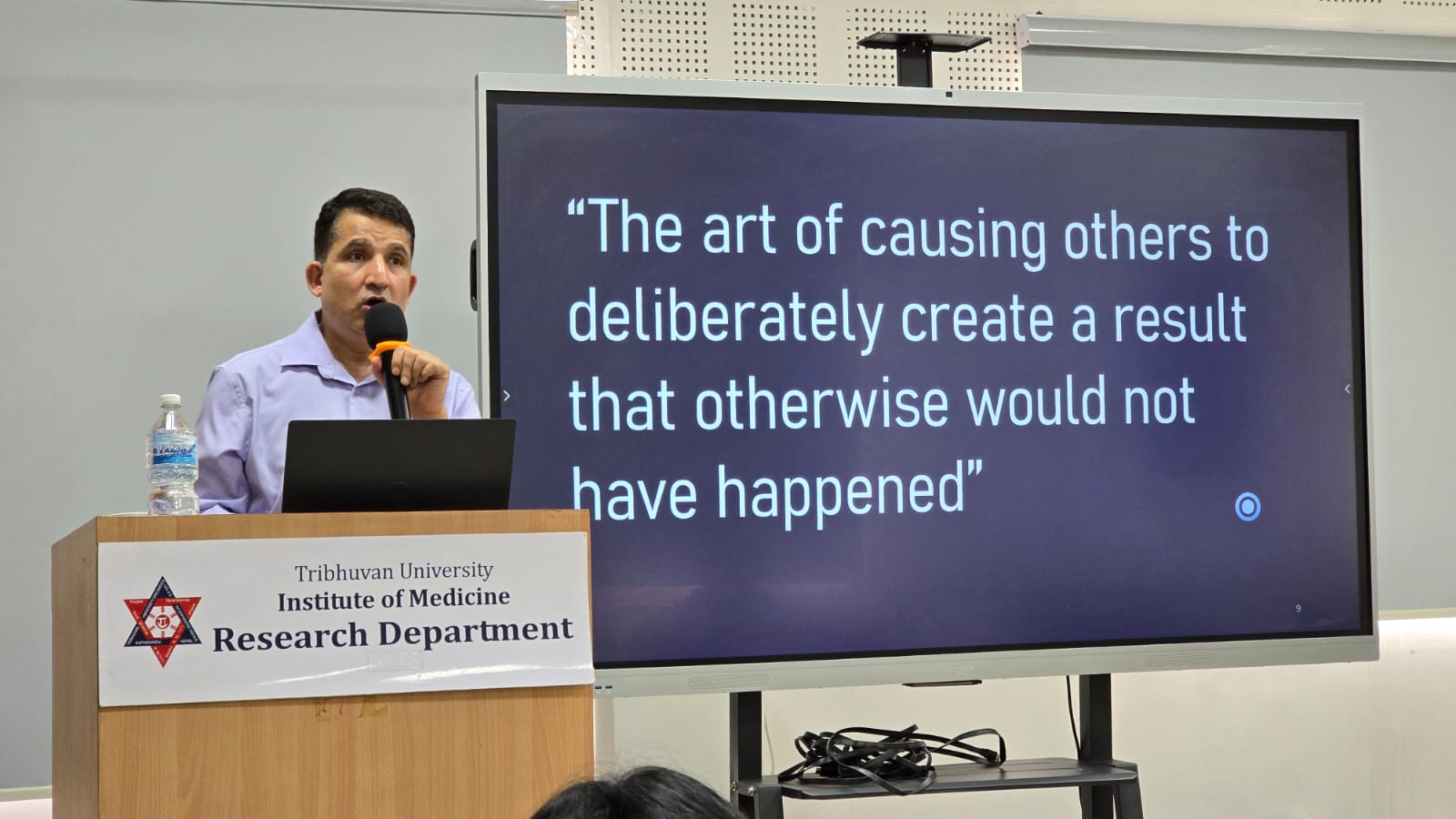
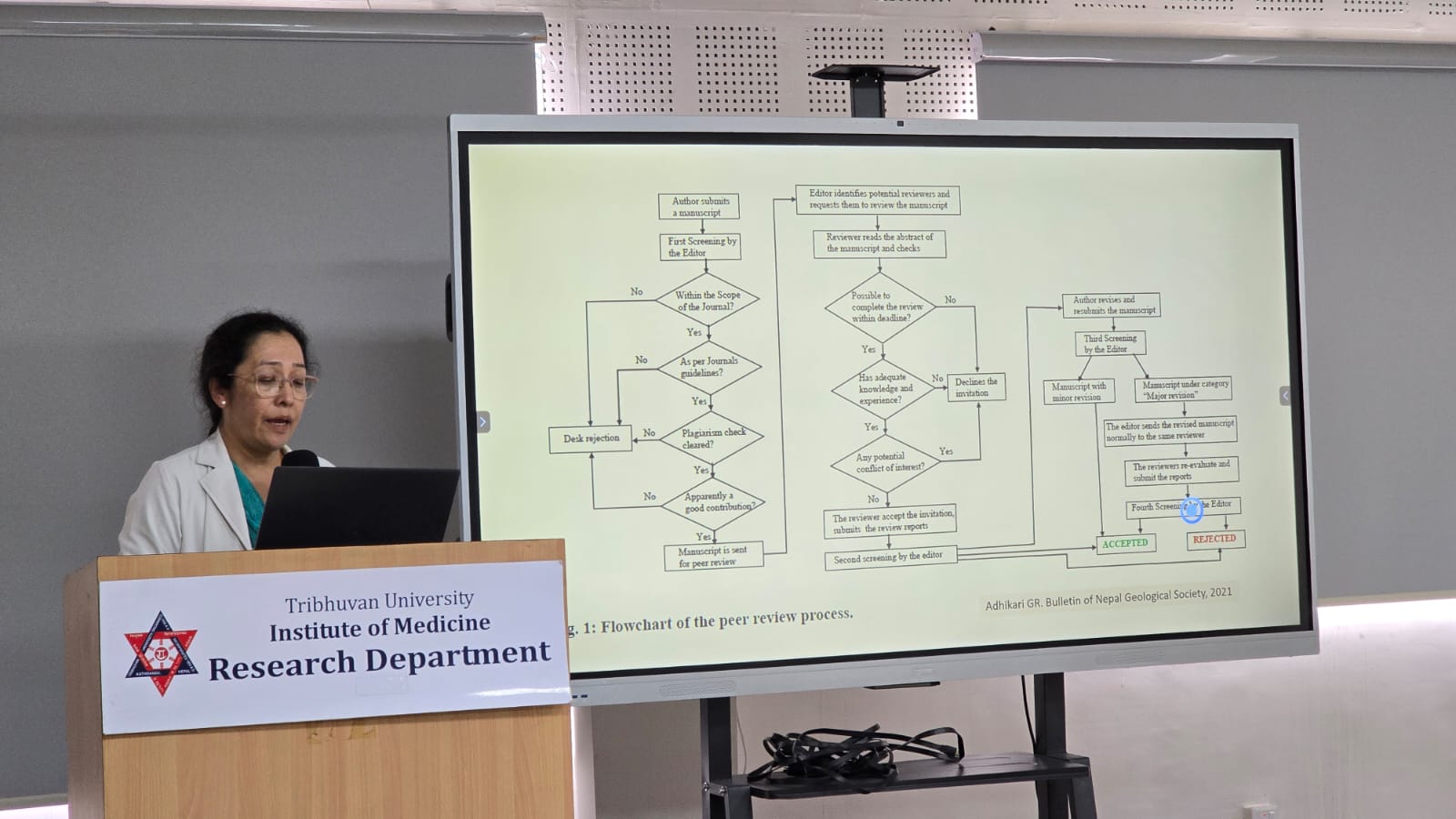
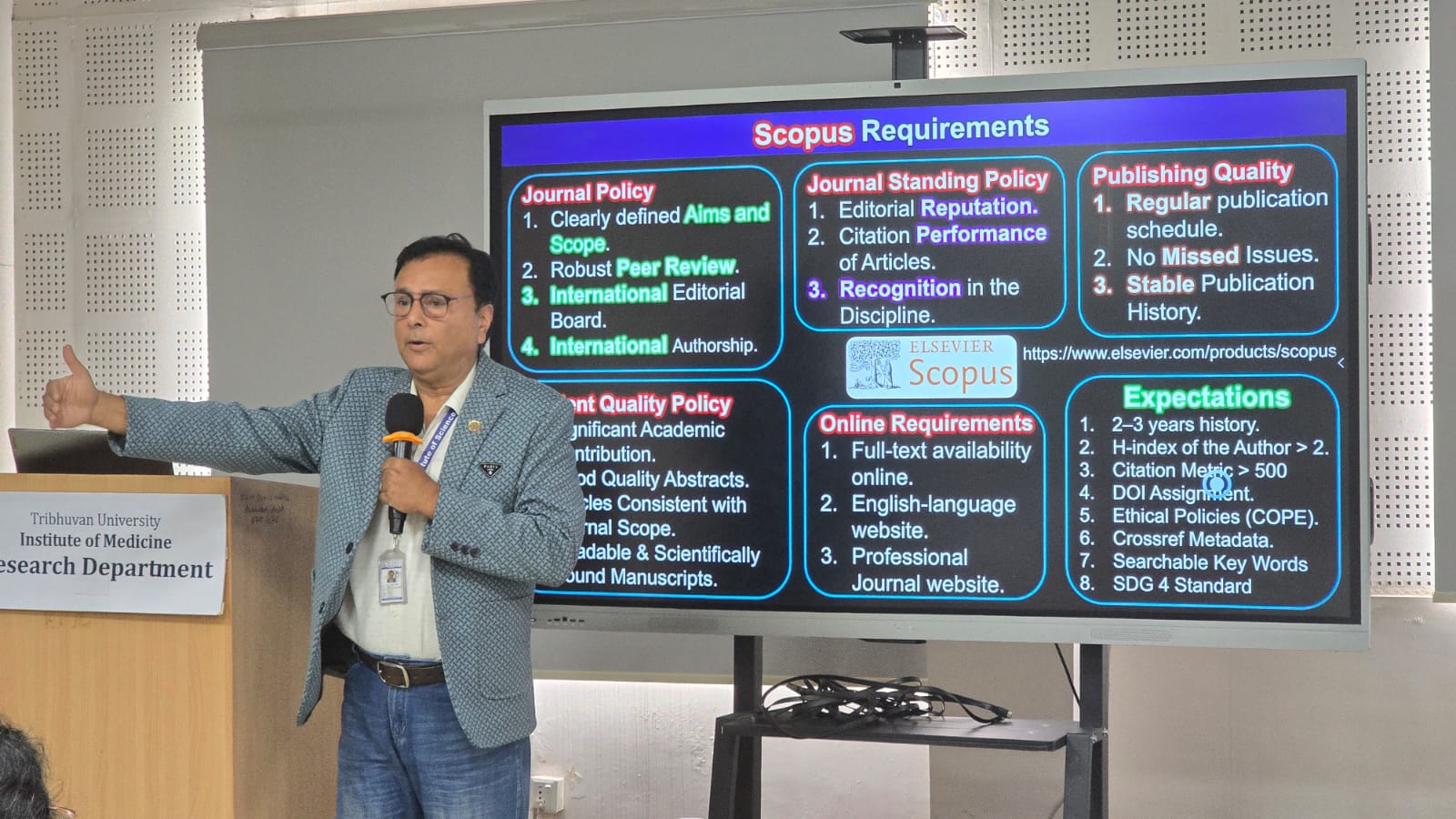
Prof. Dr. Binil Aryal highlighted on indexing of journals, providing participants with insights into international publishing standards especially focusing on Scopus and Scimago indexing systems. A dedicated session on reviewing the statistical section of manuscripts by Associate Prof. Shital Bhandary emphasized the importance of evaluating study design, data analysis, and interpretation to ensure scientific rigor.
|
|
|
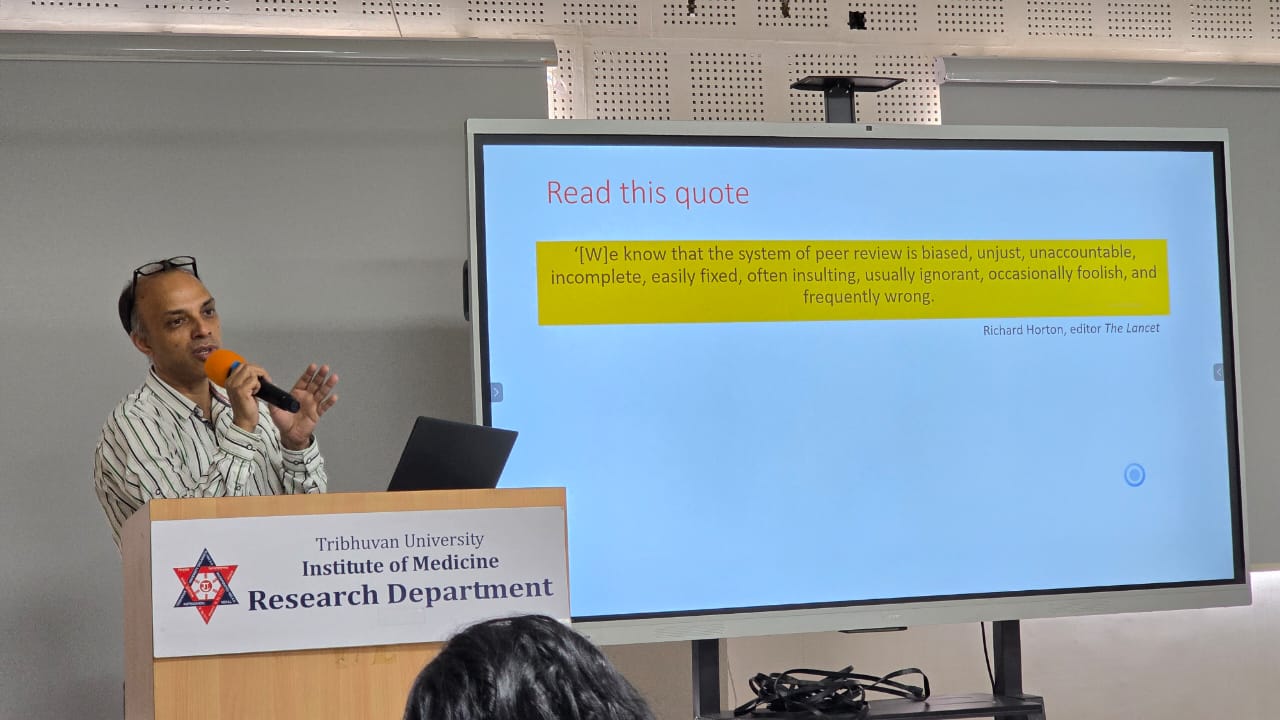
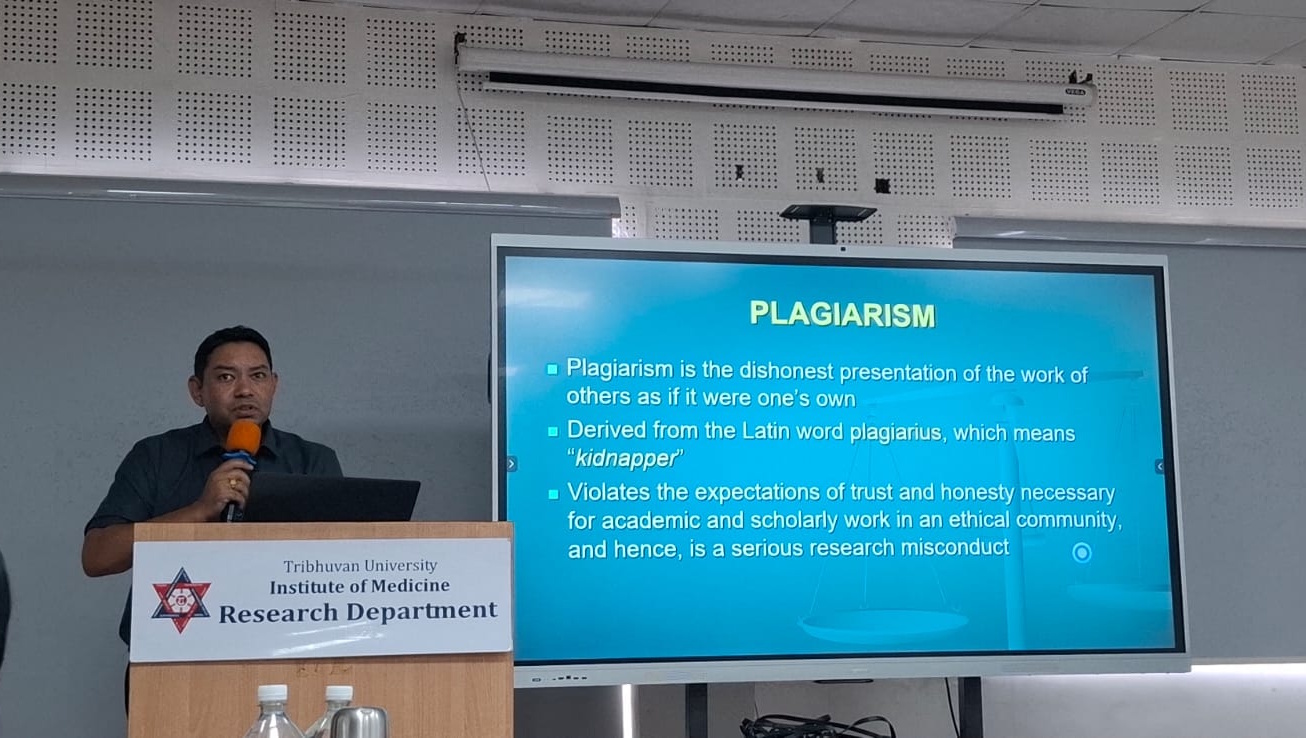
Prof. Dr. Arun Kumar Sharma's session focused on the ethics in editorial and peer review workflow, covering topics such as confidentiality, objectivity, conflicts of interest, and the responsibilities of reviewers in maintaining research integrity. In the afternoon, Dr. Lava Shrestha, Managing Editor of JIOM Nepal elucidated the growing role of plagiarism, artificial intelligence, and software tools in supporting the editorial and peer review process and their ethical and practical implications. The workshop concluded with an interactive feedback and discussion session, during which participants shared their experiences, clarified queries, and reflected on the practical application of the concepts discussed throughout the day.
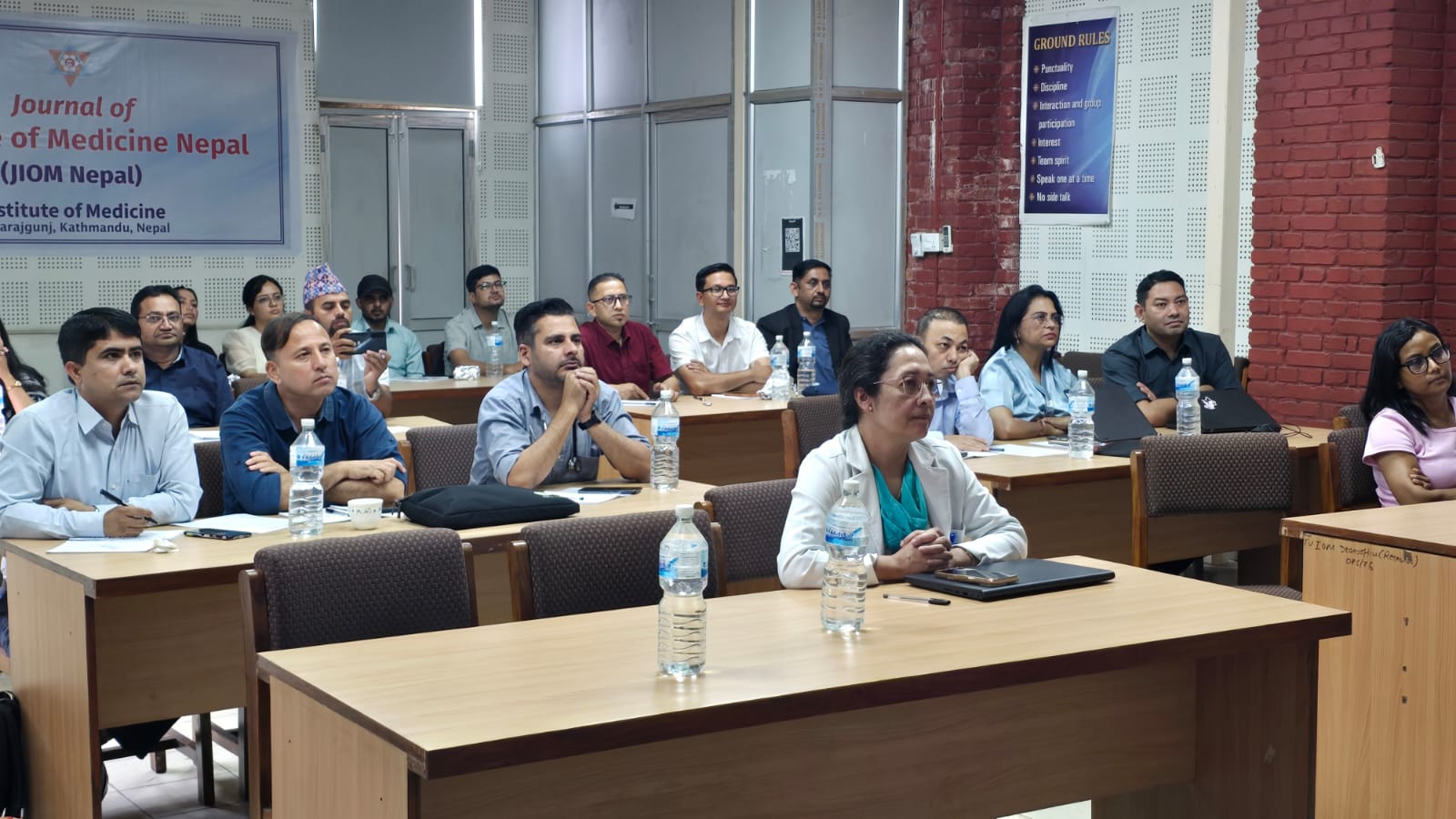
Overall, the workshop provided a comprehensive overview of the peer review process and enhanced participants' understanding of high-quality manuscript evaluation, ethical publishing practices, and the critical role of editors and reviewers in ensuring scientific excellence.